How Cold Weather Kills Car Batteries (And What to Do When It Happens)
Few things say Calgary winter like a car that clicks but refuses to turn over on a bitter January morning. Cold weather is brutal on car batteries, and understanding why can help you avoid getting stranded when the temperature plunges. Here is what the cold actually does to your battery and how to handle a no-start when it happens.
Why Cold Drains a Battery
A car battery makes power through a chemical reaction, and that reaction slows dramatically as the temperature drops. At around minus 18 degrees Celsius, a typical battery can lose roughly half of its cranking power, leaving far less energy to start the engine.
That is why a battery that seemed perfectly healthy in October can suddenly fail during the first hard Alberta cold snap. The battery has not necessarily died overnight; the cold has simply exposed how weak it had quietly become.
The Double Hit: Thick Oil and a Weak Battery
Cold weather does not just weaken the battery, it also makes the engine harder to turn. Engine oil thickens as it gets colder, so the starter has to work harder and draw more current at the exact moment the battery has the least to give.
This double whammy is why so many no-starts cluster on the coldest mornings. The engine is demanding maximum effort while the battery is at its weakest, and a marginal battery simply cannot bridge the gap.
Warning Signs Before It Dies
Batteries rarely fail without warning, if you know what to watch for. Catching these signs early can save you a frozen morning stranded in the driveway:
- The engine cranks slowly or sluggishly when starting
- Headlights dim noticeably at idle or when starting
- A clicking sound but no crank when you turn the key
- Dashboard warning lights or a weak-sounding starter
- A battery more than three to five years old
If you notice any of these as the cold sets in, it is worth having the battery tested before it strands you.
What to Do When It Won’t Start
If your car will not start on a cold morning, resist the urge to crank it repeatedly, which only drains the battery further. A short pause between attempts sometimes lets a weak battery recover enough for one good try.
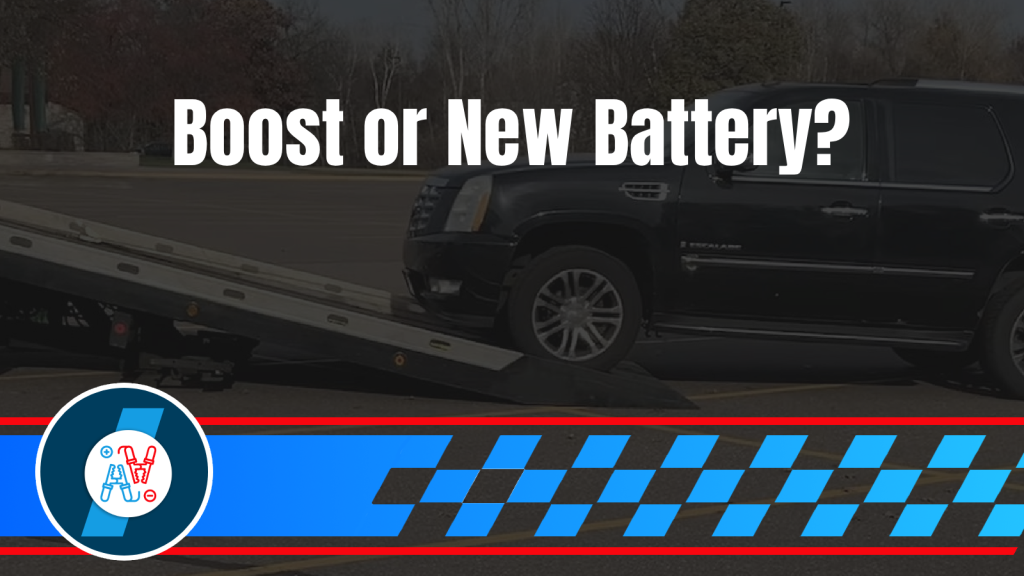
If it still will not go, a boost is usually the quickest fix. A professional can safely jump-start the vehicle and, just as importantly, tell you whether the battery is likely to survive or needs replacing before your next outing.
Boosting Safely in the Cold
Jump-starting seems simple, but a frozen battery can be dangerous to boost, and connecting cables incorrectly can damage sensitive electronics. Modern vehicles have specific procedures, and getting the polarity wrong can cause real harm.
Calling for a professional boost takes the guesswork and risk out of it, especially when your hands are numb and the wind is howling. The operator arrives with the right gear and gets you running without gambling on your car’s electrical system.
Preventing Winter Battery Failures
A little prevention goes a long way through an Alberta winter. Have your battery tested each fall, keep the terminals clean and tight, and consider a block heater to ease cold starts. Parking in a garage, even an unheated one, also spares the battery some of the worst chill.
If your battery is near the end of its typical lifespan, replacing it before winter is far cheaper than a tow, whether you are in Calgary or out in Airdrie or Cochrane.
Dead battery on a cold morning? Call Towing Calgary at (587) 330-2417 for a fast battery boost and complete roadside assistance.