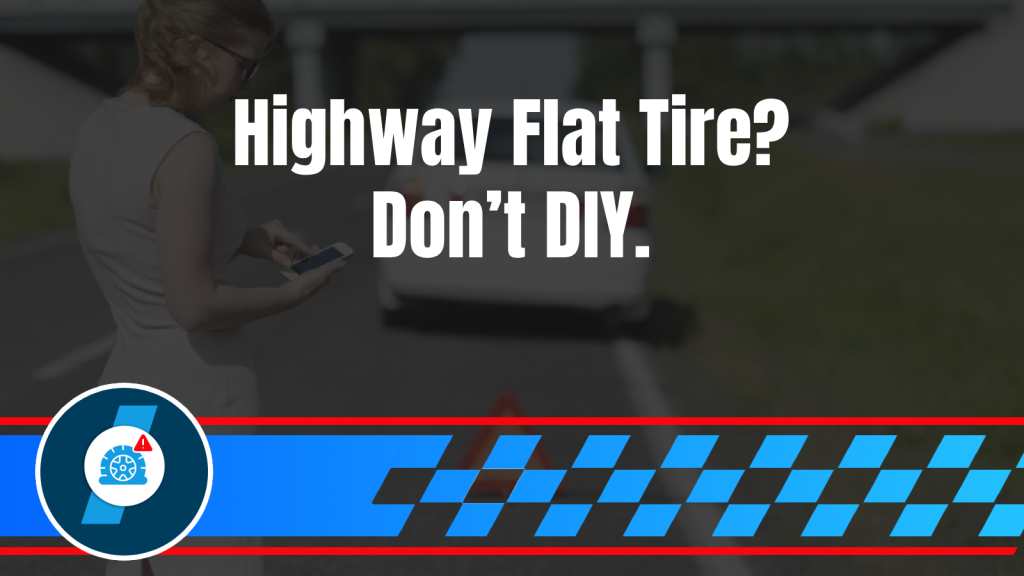
Flat Tire on the Highway? Why Changing It Yourself Is More Dangerous Than You Think
Swapping a flat in your driveway is one thing; doing it on the shoulder of Deerfoot or Highway 2 with traffic screaming past at 110 km/h is another entirely. Every year, roadside tire changes lead to serious injuries that had nothing to do with the tire itself. Here is why the highway shoulder is so risky for Calgary drivers and what to do instead.
The Real Danger Is the Traffic, Not the Tire
The tire is the easy part. The hazard is the metre or two of space between you and vehicles moving at highway speed. Drivers drift toward the shoulder, especially in poor light or bad weather, and a person kneeling beside a jacked-up car is almost invisible.
Passing trucks also throw wind blasts strong enough to rock a car on its jack. If the vehicle shifts while you are reaching under a fender for a lug nut, the consequences can be life-changing rather than just inconvenient.
Alberta Conditions Make It Worse
Add a Calgary winter and the risk multiplies. An icy or soft shoulder can let the jack slip or sink into the ground, blowing snow cuts visibility to near zero, and frigid temperatures sap your dexterity and focus within minutes.
A quick job in July becomes a genuinely dangerous one in January, when the same task takes longer and drivers behind you have far less time to react on slick pavement.
If You Must Pull Over
- Get as far right as possible, past the rumble strip and onto the widest patch of shoulder.
- Turn on your hazard lights immediately, day or night.
- Exit through the passenger-side door, away from traffic.
- Stand behind the guardrail or well up the embankment while you wait.
- Never position yourself between your car and oncoming traffic.
Why Calling a Pro Is the Safer Bet
A professional arrives in a marked truck with amber warning lights that make the scene visible from far off, and works with the traffic side protected. What feels like a delay is really a safety margin.
A trained operator changes the tire or loads the car in minutes while you stay clear of the lanes. On a busy highway, that visibility and experience alone are worth the call, and they cost far less than a hospital visit.
When a Tow Beats a Tire Change
Sometimes swapping the tire on the shoulder is not the right call at all. If the wheel is on the traffic side, the shoulder is too narrow, or a second tire is also low, the safer move is to load the whole vehicle and change it somewhere secure.
The same is true if you have no usable spare, which is increasingly common in newer cars. In those cases a flatbed or a short tow to a nearby Calgary shop removes you from danger entirely instead of asking you to work an arm’s length from the fast lane.
Prevention for Next Time
Check your tire pressures monthly, since cold Alberta mornings drop them fast, and inspect tread and sidewalls before long trips toward Banff or Red Deer. Good rubber and correct pressure are the cheapest insurance against a shoulder-side emergency.
Have a Plan Before It Happens
Deciding in advance what you will do makes a roadside flat far less stressful. Know where your hazard switch is, keep a charged phone and a towing number handy, and remember that reaching a safe exit or a wide pull-off is worth more than stopping the instant a tire goes soft.
If the tire is only losing air slowly, easing to the next off-ramp or a lit parking lot is almost always safer than working on the shoulder of a busy Calgary freeway.
Flat tire on a Calgary-area highway? Do not risk the lanes. Call Towing Calgary at (587) 330-2417 for a safe roadside tire change, full roadside assistance, or emergency towing if you would rather get off the road first.